The following information provides guidelines for Blessings, Sacraments and Special Services of the Orthodox Church.
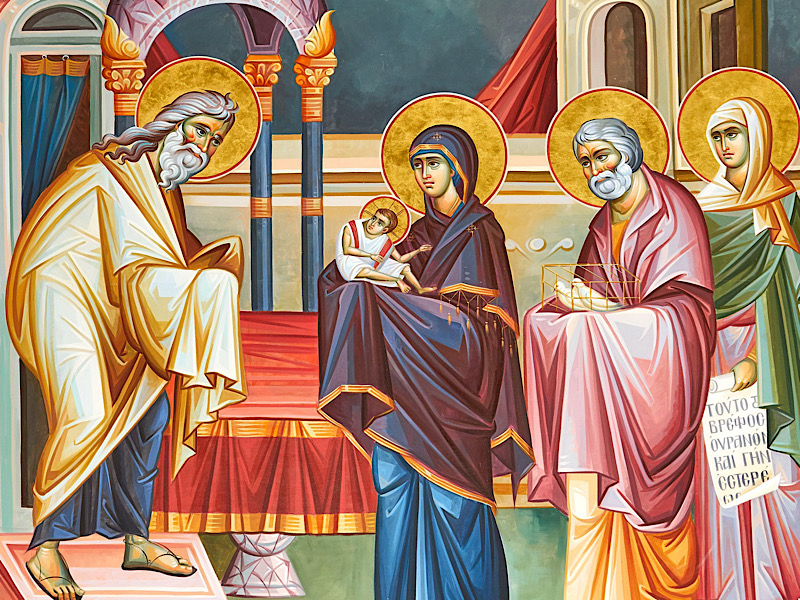
Forty days after a child is born a special service is offered in the Church which emulates the Old Testament custom in which the Blessed Virgin Mary brought Jesus into the Temple on the fortieth day after His birth, which is commemorated on the Feast of the Presentation of Christ.
It is an Orthodox Church Tradition that during the time between the birth and the 40 day blessing of the child, the mother and newborn refrain from regular sacramental life/attending church services.
Parents along with the newborn are asked to wait in the Narthex until the Parish Priest comes for them.
The priest prays for both the mother and the child which consists of prayers of joyful thanks for the safe delivery of mother and child. The service blesses the mother who has been absent from the sacramental life of the Church for forty days and formally presents the newborn child to the Church family.
At the completion of the prayers, the priest gathers the child in his arms and brings him/her into the Sanctuary for the first time, saying, "The servant of God (Name) is brought into the church, in the Name of the Father and of the Son and of the Holy Spirit." Thus we offer our children for future service to God.
Please contact the priest in advance to arrange for this service.
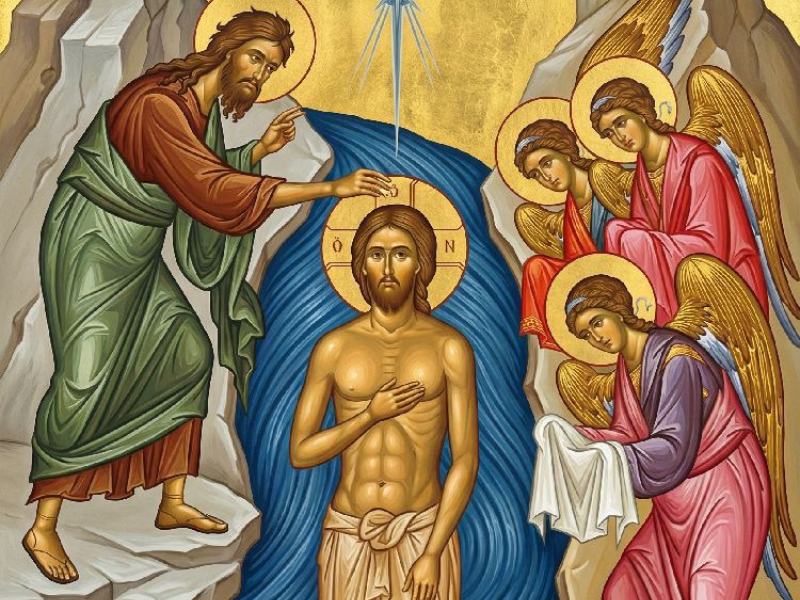
The initiation of all who enter the Orthodox Church is through the sacrament of baptism and chrismation.
A young child can be baptized any time after the forty-day blessing. If the person is an older child or adult, it is proper to first receive instruction (catechism) and then be baptized. In all cases there must be a sponsor for the person being baptized.
- The day, time, and other arrangements for the baptism should be made with the Parish Priest at least one month prior to the desired date. Also the parents of the child should not send out invitations or reserve a facility for a reception before clearing the date for the baptism in the Church.
- Choice of a sponsor, godfather (Nouno) and/or godmother (Nouna), must be discussed with the priest and approved in advance.
- Sponsor must be:
- An Orthodox Christian of proper age.
- In good spiritual standing in the Orthodox Church.
- If married, married in the Orthodox Church.
- A sponsor from another Parish may serve by presenting a letter of good standing from their home Parish Priest.
- The sponsor answers the questions and recites the Creed on behalf of the young child, since the child is not able to answer for himself or herself. The sponsor responds together with the older child or adult to questions and the Creed.
- The sponsor accompanies the newly illumined Christian to receive Holy Communion for three consecutive Sundays after baptism and Chrismation.
- The sponsor should provide:
- a cross and chain for the child/adult.
- a complete change of clothes for the child.
- three white candles.
- a small bottle of olive oil.
- a bar of soap.
- a hand towel.
- a bath towel.
- a sheet (optional for adults).
- "witness pins" (aptupá). (optional).
- Sponsor must be:
- According to the Tradition of the Orthodox Church, ONE name of Orthodox Christian origin is given at the time of baptism.
- Baptisms are NOT conducted on the following days:
- Holy Week
- The following Feast Days
- September 14 (Exaltation of the Holy Cross)
- December 25 (The Nativity)
- January 5 and 6 (Theophany)
- Palm Sunday
- Pascha (Easter)
- Ascension (Forty Days after Pascha)
- Pentecost (Fifty Days after Pashca)
- August 6 (Transfiguration)
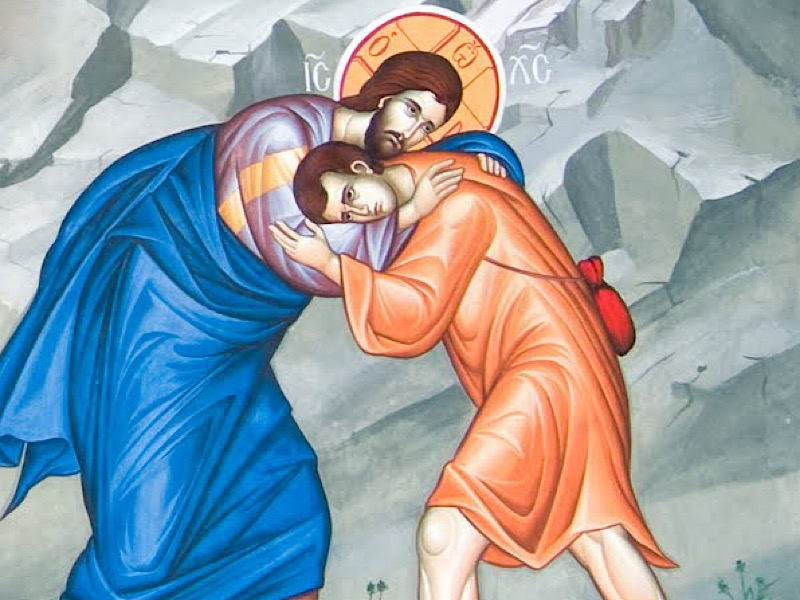
The gift of God's forgiveness is received through private prayer, corporate worship, the disciplines of prayer and fasting, penitential services and above all through the sacrament of Confession.
In the Mystery of Confession and Repentance the spiritual afflictions are treated, impurities of soul are removed, and a Christian, having received forgiveness of sins, again becomes innocent and sanctified, as they came out of the waters of Baptism.
Through this sacramental act, of the ordained Priest and the Christian believer, we have the assurance of divine forgiveness, according to the words of Christ (Jn 20:23). "Receive the Holy Spirit. If you forgive the sins of any, they are forgiven them; if you retain the sins of any, they are retained."
We confess our sins to God and the power of forgiveness is God's. However, the gift of God's forgiveness, does not automatically spare us from spiritual struggle - the continual vigilance against evil and the unceasing warfare against sin.
The priest is viewed not as a judge but as a witness, physician and guide.
In Confession:
- The priest and penitent stand next to one another facing the icon of Christ.
- The priest reads the prayers before confession.
- Then the penitent recounts his sins to God as simply and accurately as possible, holding back nothing intentionally, but trusting always in the mercy of God.
- The penitent kneels for the absolution as the priest place his epitrachelion (stole) over his head.
- Confession also provides the opportunity to receive counsel, to talk about one's deep concerns, and to be encouraged toward spiritual growth.
Confession is appropriate whenever an Orthodox Christian feels the need for it. We should make every effort to come to confession periodically or as often as needed. However, Holy Confession is especially necessary:
- when a serious sin has been committed,
- when a habitual sin has overwhelmed a Christian, or
- when a Christian has stopped growing spiritually and needs a reexamination of priorities.
It should also be a part of our total spiritual preparation during the fast periods leading up to the great feasts of Easter, Christmas, the Falling Asleep of the Theotokos and the Feast of Twelve Apostles.
Please contact the priest in advance to arrange for this sacrament.
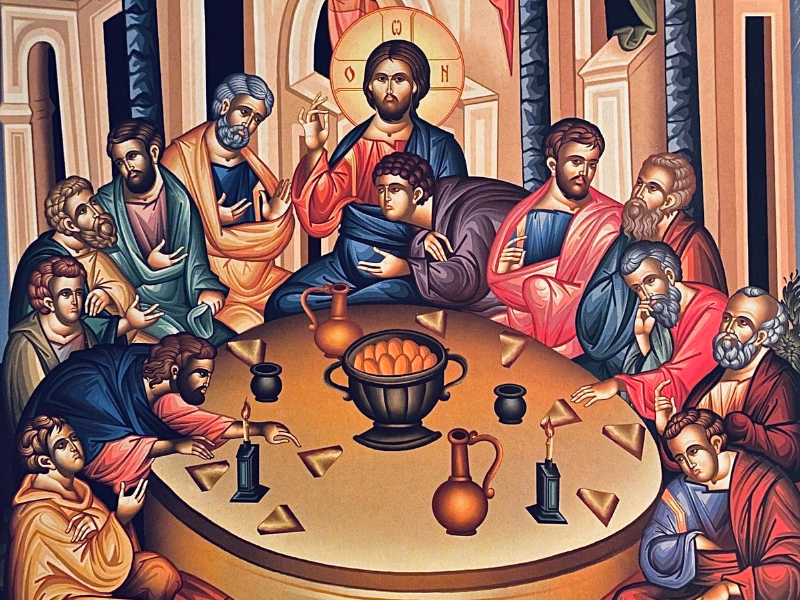
Only those who have been baptized, chrismated and are in good spiritual standing in the Orthodox Church are allowed to receive the sacrament of Holy Communion (Eucharist).
This Means:
- being baptized and chrismated in the Orthodox Church
- if married, married in the Orthodox Church
- prepared properly by
- prayer
- observing the prescribed fast days including no food or water the morning of the divine liturgy
- participation in Confession when needed!
Medication, of course, should be taken as prescribed and may be taken with a little food if required for the medication and the age/health of the individual.
Orthodox Christians MUST NOT and are NOT PERMITTED to receive communion in any other church. Also, if you have any friends or relatives who are visiting and are not Orthodox Christians, please advise them that Holy Communion is only for the Orthodox Faithful in good spiritual standing.
As Orthodox Christians, we understand that Holy Communion is the mystical Body and Blood of Christ. We know that the priest, during the most solemn part of the Divine Liturgy, calls down the Holy Spirit, Which changes the bread and wine into the Body and Blood of our Lord, God and Savior Jesus Christ.
The manner in which we receive this most precious Mystery (Sacrament) should be in accordance with the awe and reverence due to our Lord and Master. Thus, when approaching to receive Holy Communion.
We should:
- be in attendance from the beginning of Divine Liturgy
- be silent as we approach
- wipe lipstick or lip balm from our mouth
- state our baptismal name clearly
- hold the cloth under our chin
- open our mouth wide to receive
- close our mouth upon the spoon when receiving and
- wipe our mouth with the cloth after receiving communion,
- hand the cloth to the next communicant.
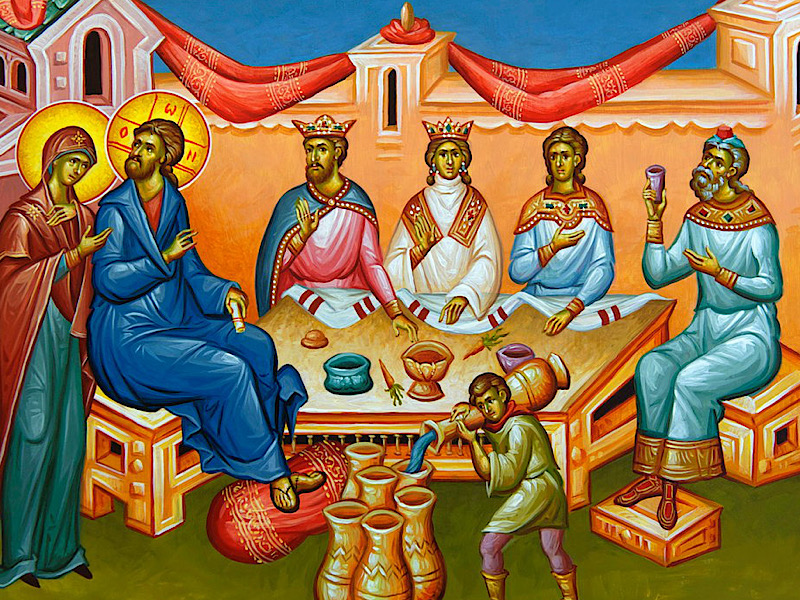
If it is God’s will that we partake in the Mystery (Sacrament) of Holy Matrimony, it is a wonderful blessing. It is a great Mystery how a man and a woman, united by God through the priest, become one flesh.
When getting married in the Church the following should be kept in mind:
No arrangements should be made or invitations printed until the wedding date is cleared with the priest.
At least four weeks before the wedding, both the bride and groom must appear before the priest in order to complete the appropriate Metropolis paperwork . This appointment with the priest should be made in advance.
Orthodox Christians are allowed to marry:
- other Orthodox Christians in good canonical and spiritual standing.
- non-orthodox Christians who are been baptized, in water, in the Name of the Father and the Son and the Holy Spirit.
A non-Orthodox Christian who marries an Orthodox Christian does not become a member of the Orthodox Church. They may not receive Holy Communion or participate in any other sacraments, receive a Orthodox funeral, serve on the Parish Council, or vote in parish assemblies/elections. To participate in the Church's life, one must be received into the Church by baptism and chrismation or, in the case of persons baptized, in water, in the Name of the Father and the Son and the Holy Spirit, following a period of instruction, by chrismation.
The following things are necessary for Holy Matrimony:
Required Items:
- rings for the bride and groom
- the crowns (atéava)
- two candles
- the civil marriage license (if applicable)
- wedding tray (usually silver) decorated with rice and koufeta (optional)
There are certain days and periods during the year when Orthodox marriages are NOT celebrated:
- Feast of the Exaltation of the Cross (September 14)
- Nativity Fast and Christmas (December 13-24 & 25)
- Forefeast and Feast of Epiphany (January 5-6)
- Great Lent and Holy Week, Pascha (Easter)
- Pentecost
- Fast and Feast of Dormition (August 1-14 & 15)
- Beheading of St. John the Baptist (August 29)
Choice of sponsor must be discussed with the priest and approved in advance. The sponsor, best man (koumbaros) and/or woman (koumbara):
- must be an Orthodox Christian Christian in good canonical and spiritual standing.
- if from another community, prior to the wedding must present a letter of good canonical standing from their parish priest.
- If married, his or her marriage must have been blessed in the Orthodox Church.
- if divorced, must have an Ecclesiastical Divorce.
Non-Orthodox persons may, however, be members of the "wedding party".
If the bride and/or groom is under 18 years of age, he and/or she must present a letter of consent from the parents or legal guardian at the time they apply for the ecclesiastical marriage license. If from a foreign country after their 18th birthday, she and/or he must present, when they apply for the church license, a Certificate of Eligibility for Marriage from the bishop and/or civil authority of their own town or country.
The singing or playing of non-Orthodox hymns or secular songs is not permitted before, during, or after the service. Only a traditional wedding march may be played. All other hymns and chanting before, during and after must be Orthodox hymns.
Divorced Orthodox must meet the following:
- For previous civil marriages, a copy of the civil divorce must be presented at the time of application for the ecclesiastical marriage license.
- If the previous marriage was in the Orthodox Church, the original ecclesiastical dissolution must be presented at the time of application for the ecclesiastical marriage license.
An Orthodox Christian, through leniency (oikonomia) and in recognition of our human imperfection, is allowed three ecclesiastical marriages.
To remain in proper canonical and spiritual standing, an Orthodox Christian must be married in the Orthodox Church by a canonically ordained Orthodox Priest or Bishop.
Orthodox Christians marrying outside the Church remove themselves from the sacramental life of the Church.
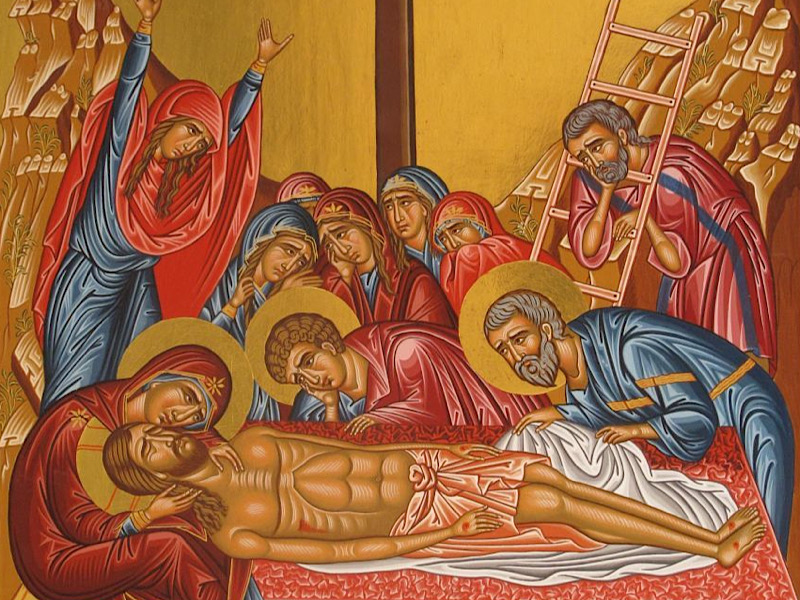
The Church Funeral Service is reserved for those baptized Orthodox Christians. It is the means through which the Church prays for one of its members who has died in the faith of Christ.
If someone is known to be near passing from this life, it is important to notify the Parish Priest immediately. This may allow the person a chance to confess and/or receive one of the Holy Mysteries before passing away. Being at peace with God and our fellow man is essential before leaving this life.
At the time when one of our loved ones does pass, you should:
- First, call the priest
- Second, call your family doctor
- Third, call the funeral director.
The priest will certainly help with any and all arrangements that need to be made prior to the funeral.
The priest will conduct a Trisagion prayer service the evening before the day of the funeral. This may be done at the funeral home or the Church.
On the day of the funeral the priest may conduct a Trisagion prayer service before escorting the loved one to the church for the funeral service. Family and friends may be afforded an opportunity to pay their final respects at the end of the Funeral Service. The Trisagion will again be done at the grave-side before interment.
The 'makaria' or 'meal of blessed memory' is a tradition that is often offered following the services as a comfort to the bereaved family members. It is also the family's way of expressing thanks to those who attended the services or assisted the bereaved in some way.
Cremation is forbidden by the Greek Orthodox Church as the body is "the temple of the Holy Spirit," testified by St. Paul the Apostle and the Saints. In the event of suicide, please consult the Parish Priest.
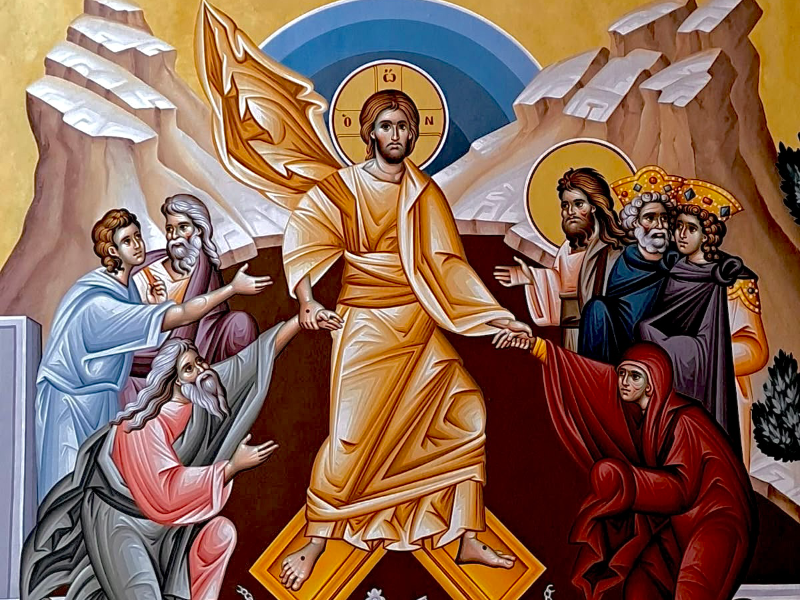
A memorial service is how Orthodox Christians pray for the repose of the souls of the departed as an expression of faith in the resurrection and the belief that in death our relationship with Christ continues.
In the Orthodox Church it is traditional to have the Trisagion prayers said on the third and ninth days after an Orthodox Christian has passed away.
The memorial service (mnimosyno) is a more elaborate prayer service for commemoration of the dead and involves an offering known as kollyva (boiled wheat). This service is read during the Divine Liturgy, just before the final dismissal.
The wheat is a symbol of the Resurrection. When speaking of the Resurrection, our Lord said: “Unless the grain of wheat falls into the earth and dies, it remains alone, but if it dies it bears much fruit.” (John 12:24).
Memorial services are traditionally offered on the nearest Sunday:
Memorial Guidlines.
- 40 Days after repose
- At the six-month anniversary of death.
- At the first-year anniversary of death.
- At the third-year anniversary of death.
- At the fifth-year anniversary of death.
- At the tenth-year anniversary of death.
- For all other Memorials, the deceased may be remembered at the yearly Saturday of Souls Liturgies.
If you wish to request a Memorial service for a departed Orthodox Christian, please contact the Parish Priest at least a month in advance.
In general, when preparing for a Memorial service you should bring the following items:
- koliva (boiled wheat)
- prosphoron (Offering Bread)
- list of names to be remembered.
In the event that you are not able to provide any of these items, please consult the Parish Priest
Memorials are NOT performed on:
- All holy days of the Lord, such as Christmas, Epiphany, Pascha, Presentation of Christ, Transfiguration, etc.
- All holy days of the Theotokos, such as the Nativity of the Theotokos, the Entrance into the Temple, the Annunciation, and the Dormition.
- from the Saturday of Lazarus through Sunday of Thomas.
- Exaltation of the Precious Cross.
- Sunday of Pentecost.
Memorial services are not said for non-Orthodox Christians. Instead we pray for them Privately.
Weekly Services:
When scheduledCalendar
Sunday:
Orthros - 9:00 a.m.Divine Liturgy - 10:00 a.m.
Address:
674 42nd streetSouth Ogden Utah, 84403
Directions